 It
was, she said, the
Red Army Temple. The Temple was certainly pleasant, looking like a county library
right down to the wood floors and the air-conditioning, which greeted us like a blessing.
We entered through a wooden hall and found a courtyard growing bamboo. The tops of the
stalks reached through a hole in the roof. Mai Lin pointed out how bright and perfect the
trunks were. "See? Always green! Red Army lose tree, but always living, always
more!"
It
was, she said, the
Red Army Temple. The Temple was certainly pleasant, looking like a county library
right down to the wood floors and the air-conditioning, which greeted us like a blessing.
We entered through a wooden hall and found a courtyard growing bamboo. The tops of the
stalks reached through a hole in the roof. Mai Lin pointed out how bright and perfect the
trunks were. "See? Always green! Red Army lose tree, but always living, always
more!"
We
walked over the stones toward the main gallery. At the door she suddenly stopped.
She turned to me with a look of wonder and said "You no fear?" This was the
place of the dead, after all; the air should be filled with ghosts.
Ghosts?
Oh, I concluded, ghosts must inhabit temples; that makes sense. But as for being
frightened, I didn't know what to say. I had a choice between rejecting her beliefs, or
being patronizing; so I simply said that I wasn't worried.
She
said "That is good thinking; But Chinese person always a little fear--" She
stood in the door for a moment, carefully, before entering.
By then I almost understood
what I saw. There were row after row of shelves, widely set and twenty
feet high, with little glass doors. Within each cubicle sat a box, carved
and polished in the shape of a palace or an exotic garden. Inside them
were cranes, or celestial ladies, attending snapshots. Each photo portrayed
a...soldier. Some of the subjects were young and trim, obviously pulled
from an old album; most, however, were old and crumpled, like lions trapped
in flypaper.
Of
course. These boxes held the ashes of dead soldiers; and the families decorated them with
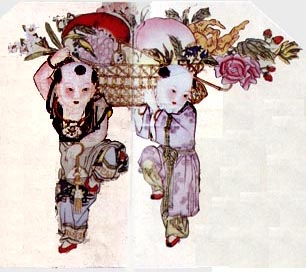
plastic symbols. Peaches could be added to give long life, or oranges to bring good luck.
The angels symbolized the afterlife, the cranes represented conjugal loyalty. Many boxes
also held the traditional tablets for ancestor worship. Once, every Chinese family had
kept a dozen, but that was before the Cultural Revolutions, so these were the first I had actually seen.
 "Aren't you sad?" Mai Lin wondered. However, I saw no reason
to be depressed. Instead, I enjoyed the surprise. Chinese culture is ancient,
but most of it was erased in the Cultural
Revolution. Now the temples and the rites were mostly gone, and modern Chinese live in concrete high-rises and go to 'political study.' I had
spent a year looking for anything which had not been copied from Russia.
Now I marveled at the compromise which this institution represented.
Here was old China, with its millions of tiny yards and tiny
shrines made safe and private by ancient ties. Here, as well, was Red China, where
everything serves the Party or the Army; but unlike the Communist Youth League, the
feelings were as real as the photos themselves. These boys had fought and even died for
the Party, they had ravaged Korea
and Tibet
and even NanBei in the name of Socialism, but they never wore the gapless smiles of
propaganda posters. They looked like real people, black and white versions of my own
students. The old men were also honestly photographed. Instead of the heroic chins or
distant expressions you see in movies, their eyes seemed to glare like tigers. These
soldiers had seen history before the books were rewritten; now, I could feel how bitter
and baffled they were, loving China to death.Back in the lobby we talked to the attendant, and she
explained the setup. She said that the Army had built the temple, and that any soldier
could rest here for free during the first twenty years; after that, the family had to pay
rent. Relatives visited on the anniversary, and the Day Of The Dead. They often bought
plastic peaches, or picked up some paper coins and ingots. Indeed, she showed us a glass
counter where these things were sold. The gifts should cheer the departed, and take their
minds off being dead. I
guess I added that. Now suddenly, my good mood was gone, and I felt a
sense of futility, as if I were standing in a ruined house, with broken
windows and rat droppings on the floor. It wasn't anything about the temple,
which was one of the most handsome places I had seen in China. Instead,
there was something about the photos, and something that had happened
before. As I thought about it I realized that this temple reminded me
of a funeral back home in Virginia.
"Aren't you sad?" Mai Lin wondered. However, I saw no reason
to be depressed. Instead, I enjoyed the surprise. Chinese culture is ancient,
but most of it was erased in the Cultural
Revolution. Now the temples and the rites were mostly gone, and modern Chinese live in concrete high-rises and go to 'political study.' I had
spent a year looking for anything which had not been copied from Russia.
Now I marveled at the compromise which this institution represented.
Here was old China, with its millions of tiny yards and tiny
shrines made safe and private by ancient ties. Here, as well, was Red China, where
everything serves the Party or the Army; but unlike the Communist Youth League, the
feelings were as real as the photos themselves. These boys had fought and even died for
the Party, they had ravaged Korea
and Tibet
and even NanBei in the name of Socialism, but they never wore the gapless smiles of
propaganda posters. They looked like real people, black and white versions of my own
students. The old men were also honestly photographed. Instead of the heroic chins or
distant expressions you see in movies, their eyes seemed to glare like tigers. These
soldiers had seen history before the books were rewritten; now, I could feel how bitter
and baffled they were, loving China to death.Back in the lobby we talked to the attendant, and she
explained the setup. She said that the Army had built the temple, and that any soldier
could rest here for free during the first twenty years; after that, the family had to pay
rent. Relatives visited on the anniversary, and the Day Of The Dead. They often bought
plastic peaches, or picked up some paper coins and ingots. Indeed, she showed us a glass
counter where these things were sold. The gifts should cheer the departed, and take their
minds off being dead. I
guess I added that. Now suddenly, my good mood was gone, and I felt a
sense of futility, as if I were standing in a ruined house, with broken
windows and rat droppings on the floor. It wasn't anything about the temple,
which was one of the most handsome places I had seen in China. Instead,
there was something about the photos, and something that had happened
before. As I thought about it I realized that this temple reminded me
of a funeral back home in Virginia.